

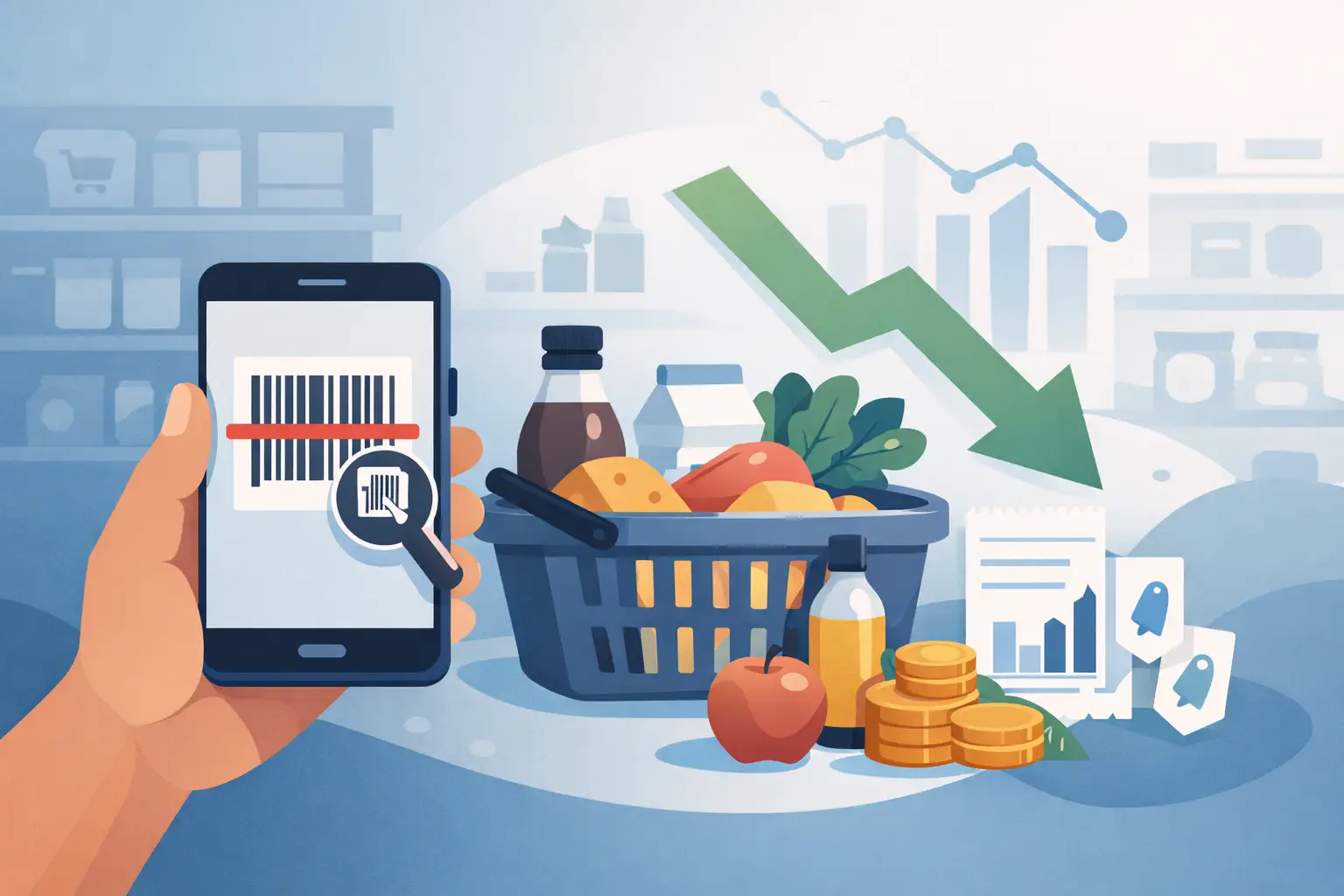
A £3.50 item can look like a small decision until it appears in the basket every week. Barcode scanner apps give shoppers a quick way to check whether that familiar product is really the best-value option before paying. Scan the pack, compare the available price information, and decide whether to buy it, switch it or wait.
For UK households keeping a close eye on food spending, the value is not in scanning every item for the sake of it. It is in catching the regular purchases where a small saving repeats: branded cupboard staples, baby products, toiletries, pet food, soft drinks and cleaning supplies. Those are the costs that quietly shape a monthly budget.
What barcode scanner apps do for shoppers
A barcode scanner app uses your mobile phone camera to read the barcode printed on a product. The barcode identifies the specific item, allowing the app to match it with product details and, where available, current pricing from supermarkets or retailers.
That gives you a faster starting point than searching manually. Instead of typing a long product name, size and flavour into a search bar, you can scan the packet in seconds. A useful app should then help you see the product name, pack size, price and comparable alternatives clearly enough to make a practical decision.
The best use is not simply finding the lowest number on screen. It is checking whether the product is available at that price, whether the pack size matches, and whether a different brand or format costs less per unit. A cheaper-looking bottle is not always cheaper value if it contains less.
When a scan can save you money
Barcode scanning is most useful when you are deciding between a habitual purchase and a possible alternative. If you normally buy the same coffee, shampoo or cereal without checking, a scan gives you a reason to compare before that routine becomes expensive.
Use it while building a shopping list, in the supermarket aisle or when checking items already at home. Scanning an empty packet before adding it to next week's list can show whether the same product costs less elsewhere or whether an equivalent option is better value.
It also helps when promotions make prices harder to judge. A multibuy deal may sound worthwhile, but it only saves money if you need the quantity and the unit price beats the alternatives. Barcode information can narrow down the exact item so you can compare like for like rather than relying on large promotional labels.
Focus on repeat purchases first
You do not need to scan a whole trolley. Start with products bought often and products with noticeable price differences between supermarkets. A household that saves 30p on five regular lines each week keeps around £78 over a year. The amount will vary, but the principle is simple: repeated savings matter more than a one-off bargain.
Keep a short list of the items that deserve a price check. For many households, this includes:
- coffee, tea, cereal and lunchbox snacks
- nappies, formula, pet food and household paper
- washing detergent, dishwasher tablets and toiletries
- branded sauces, fizzy drinks and frozen food
Once you know where these items are usually cheapest, comparison becomes quicker. Scan again when prices change, a promotion ends or you are shopping at a different supermarket.
How to use barcode scanner apps effectively
Start by checking the exact product. Pack sizes, flavours and product updates can have separate barcodes, even when they look almost identical on the shelf. Scan the item you intend to buy rather than a similar product beside it.
Next, compare the pack size and unit price. For groceries, the most reliable comparison is usually price per 100g, per kg, per litre or per item. If one 500g bag costs £2.00 and a 750g bag costs £2.70, the larger bag is cheaper per 100g, but only if you will use it before it goes stale or out of date.
Then check the full cost of changing shops. Saving 20p on one item is not helpful if a separate trip uses fuel, parking or time. The strongest savings come from grouping cheaper products into the shop you were already planning, or using the comparison to decide which supermarket gets the main weekly shop.
Finally, treat a scan as a prompt to choose, not an instruction to buy. If the lowest-priced option is unavailable, requires a membership offer you will not use, or means buying more than your household needs, it may not be the right deal.
Scan in good light and check the result
Most scanning issues are straightforward. Wipe the camera lens, flatten the packet where possible and keep the barcode fully in view. Shiny packaging, crumpled labels and poor lighting can stop a mobile phone camera reading the lines properly.
Always check that the result matches the item in your hand. Product packaging changes, supermarket own-brand ranges are updated and manufacturers sometimes alter sizes without making the change obvious. The product name and weight on screen should match the pack before you rely on a price comparison.
The limits to understand before you buy
No price tool can guarantee that every shelf label, local promotion or stock level is identical at the exact moment you shop. Prices can vary by store, region, online versus in-store channel and loyalty pricing. A barcode scan is valuable price intelligence, but it should not replace checking the final price at the shelf or checkout.
Some products will not return a useful match. This is more common with newly launched items, seasonal lines, reduced-to-clear stock, local products and goods sold in different pack formats. If a scan does not find the product, search by name and size, or compare the shelf unit price with a close alternative.
There is also a privacy point. Barcode scanner apps may request camera access because scanning depends on it. Before downloading any app, review what information it collects, whether an account is required and how location data is used. Location can improve nearby price and fuel results, but shoppers should stay in control of permissions.
Make price checks part of your weekly routine
The goal is not to turn grocery shopping into a full-time task. Build a simple habit around the decisions with the biggest effect. Check your core list before leaving home, scan one or two expensive or frequently bought items when you are in store, and review alternatives when a favourite product rises in price.
PricePAL Compare is designed around that practical approach: compare grocery prices, scan barcodes and use clear information to find cheaper options before you commit. Pair grocery checks with a look at local fuel prices before a planned fill-up, especially if you drive regularly. Food and fuel are recurring costs, so small improvements in both categories can give your budget more breathing room.
A useful rule is to keep convenience in the calculation. Paying slightly more for one item may be sensible when it prevents an extra journey or avoids waste. Savings are strongest when they fit your household's normal routine, not when they create more work than they are worth.
The next time you reach for a product you buy on autopilot, scan it first. One quick check can turn a routine purchase into a lower-cost choice, and that is how weekly savings begin to add up.