

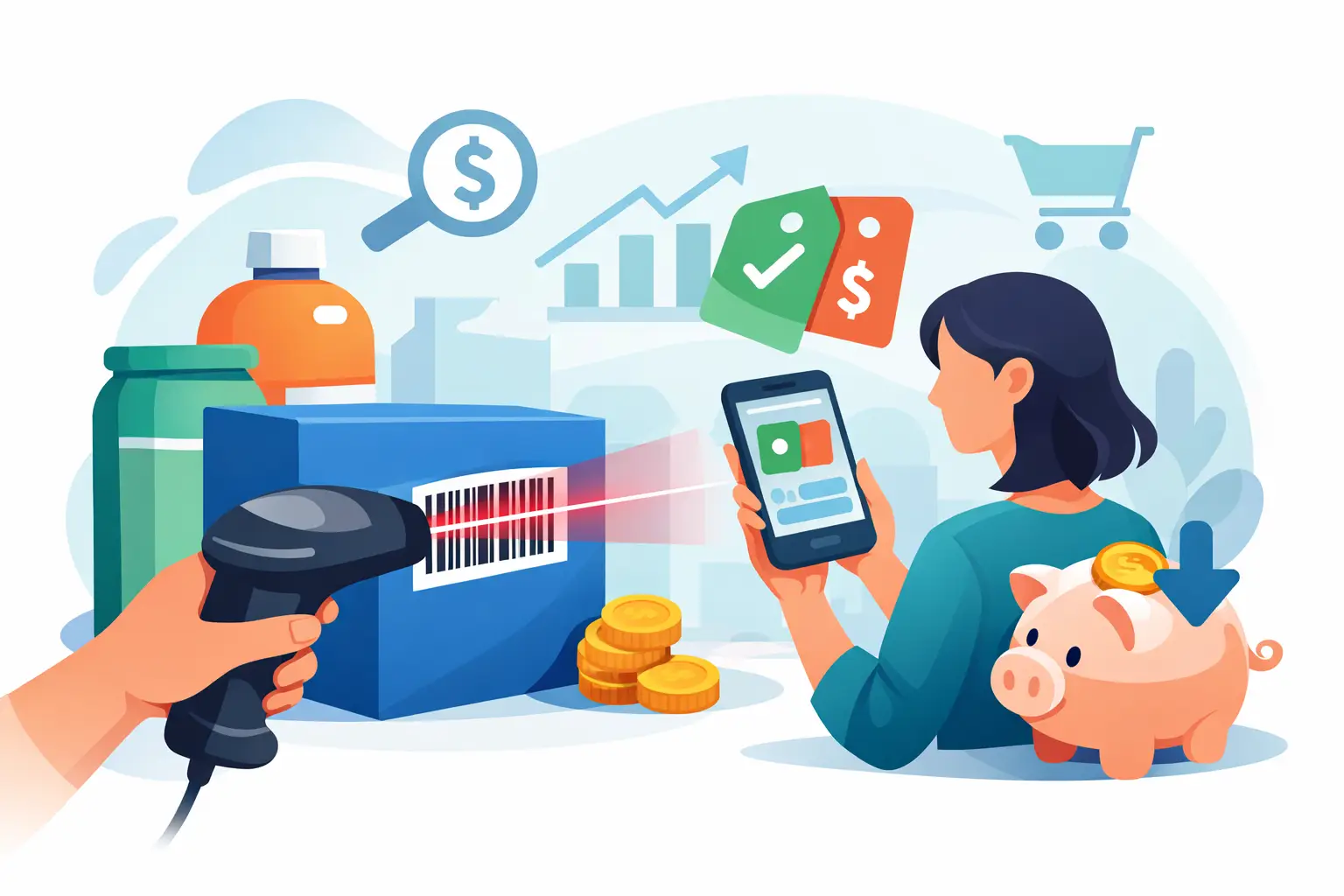
A barcode scanner to compare prices turns a shelf-side guess into a clear buying decision. Scan the item you are considering, check what it costs elsewhere, and decide whether to buy now, switch shop or choose a better-value alternative. For households watching a weekly food budget, those small checks can stop higher prices becoming an expensive habit.
The value is not in scanning everything you put in the trolley. It is in using price information at the moments that matter most: when a familiar brand costs more than expected, when a promotion looks tempting, or when you are planning a larger shop. Used well, barcode scanning helps you compare grocery prices quickly without relying on memory, shelf labels or a single retailer’s claim of value.
Why barcode price checks make a difference
Grocery prices vary between retailers, and the gap is not always where shoppers expect it. One supermarket may have a low price on pasta but charge more for the sauce, coffee or household basics you buy every week. Promotions can add another layer of confusion. A multibuy offer may be cheaper only if you genuinely need the quantity, while a larger pack can carry a higher price per 100g than the standard size.
A barcode identifies the specific product and pack size in front of you. That makes it far easier to compare like for like. Rather than searching broadly for “washing powder” and sorting through dozens of similar results, you can check the exact item, then see whether another retailer has it for less.
This matters most on repeat purchases. Saving 40p on one item once is useful. Saving 40p on a product your household buys every week can add up across the year, especially when the same approach is applied to cupboard staples, toiletries, cleaning products and packed-lunch essentials.
How to use a barcode scanner to compare prices
Start by scanning the barcode on the product packaging. Keep the code in good light and hold the phone steady until it is recognised. The result should identify the product, but take a moment to check the description and size. Different flavours, multipacks and revised pack sizes can look nearly identical.
Next, compare the displayed price with the price where you are shopping. If another retailer is cheaper, decide whether the saving is worth making a separate trip. A 15p difference may not justify extra travel, but a bigger saving across several planned items often will. The best decision is based on the full basket, not one low-priced product in isolation.
If you are at home planning your shop, scan items from the cupboard, fridge or shopping list as you run out. This gives you time to build a cheaper basket before you leave. It also reduces the chance of adding an expensive replacement simply because it is the first option you see in the aisle.
PricePAL Compare is designed around this practical routine: compare grocery prices, scan barcodes and use the information to make lower-cost choices on regular household spending.
Check the pack size before you compare
The most useful barcode comparison is like for like. A 500g pack and a 750g pack are different products even when the branding and flavour match. Compare the exact pack first, then use the unit price to judge whether a substitute gives better value.
Unit pricing is especially helpful for items sold in several formats, such as cereal, cheese, coffee, nappies and laundry products. Look at the price per 100g, per litre, per wash or per roll. A lower ticket price can still be poor value if the pack is much smaller.
There are times when the cheaper unit price is not the right choice. Buying a large pack of fresh food that goes off before you use it wastes money. The sensible option is the size your household will realistically finish.
Treat promotions as a calculation, not a signal
Retail offers are useful when they reduce the cost of items already on your list. They are less useful when they encourage extra spending or leave you with products you would not normally buy. Scan and compare before assuming a yellow shelf label is the cheapest available price.
Watch for temporary loyalty prices, multibuys and “was” prices. Some offers require a retailer’s membership scheme, while others may apply only for a short period. If the comparison price does not include the same conditions, the difference may not be as straightforward as it first appears.
A simple rule helps: buy an offer when it lowers the cost of a planned purchase, not because it creates a reason to purchase more.
Build a weekly routine around the biggest savings
Checking every barcode can slow down a shop. A more efficient approach is to focus on products where price differences are likely to matter. Start with branded goods, household essentials, baby products, coffee, toiletries and items bought frequently. These are often the products where changing retailer or switching to an equivalent alternative can produce a noticeable saving.
For the rest of the basket, keep a short core list of prices you know are competitive. Over a few weeks, you will learn which shop tends to suit your household for particular categories. That gives you a realistic plan rather than chasing every single penny across multiple stores.
Consider these four moments for a quick barcode check:
- when a regular item has increased in price
- when you see a promotion that looks unusually good
- when you are deciding between a branded item and an alternative
- when you are preparing a larger weekly or monthly shop
This approach keeps the process useful. It takes only a few checks to expose a costly price difference, and it avoids turning a routine shop into a lengthy research task.
When the lowest product price is not the lowest overall cost
The cheapest listed product does not automatically create the cheapest shop. Travel costs, time and the rest of your basket all count. If a different supermarket saves £3 on a few items but costs £4 in fuel and adds an hour to your day, staying put may be the better financial choice.
This is where grocery and fuel decisions connect. Plan your food shop around journeys you already need to make where possible. If you can combine a cheaper supermarket with a fuel stop that is competitively priced, the overall saving is stronger. If not, a convenient local shop with a carefully chosen basket may be better value than a special trip.
Home delivery and collection charges deserve the same treatment. They can be worthwhile if they prevent impulse spending or avoid a separate drive, but add the fee before comparing your final total. Value is about what leaves your bank account, not only the shelf price.
Common scanning problems and how to handle them
Occasionally, a barcode will not return a result or will show a product that is no longer available. This can happen with new lines, retailer-exclusive products, seasonal stock or packaging changes. Try scanning again, checking for glare or damage on the code, and confirm that you are scanning the product barcode rather than a label from the shelf.
If the item cannot be matched, use the product name, size and brand to compare manually. For fresh produce, bakery goods and own-label products sold without a standard barcode, unit price comparison is usually the most practical option.
Prices also change. A comparison is a guide to a better decision, not a guarantee that every branch will display the same price at every moment. Check the current price before you commit, particularly on short-term promotions and products with changing pack sizes.
Make scanning work for your household
The best savings system is one you will repeat. Keep a running list of products that are consistently better value elsewhere, scan only the items with the most potential to affect your budget, and compare prices before a planned shop rather than after the trolley is full.
A barcode scan takes seconds. Used at the right time, it gives you the evidence to leave an overpriced item on the shelf and keep more of your weekly budget for the things that matter.