

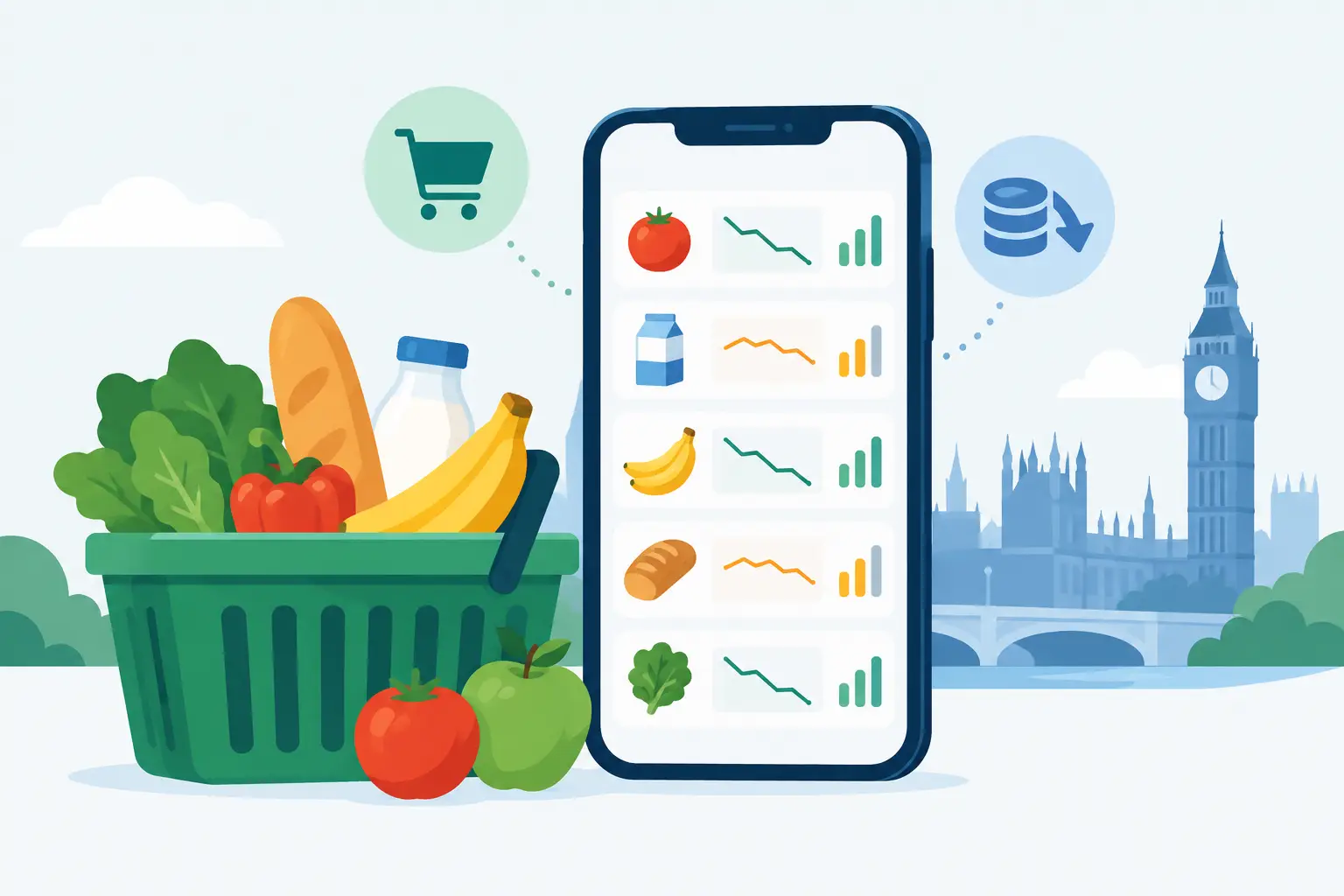
A £1 difference on a branded item may not look like much at the shelf. Multiply that across a weekly shop, school lunches, toiletries and household essentials, and it becomes money your household could keep. The best apps for grocery price tracking help you see those differences before you pay, rather than spotting them on next week's receipt.
For UK shoppers, the right app is not simply the one with the loudest offers. It is the one that makes price checking quick enough to use every week, covers the shops you actually visit and helps you compare like for like. That might mean checking a basket before leaving home, scanning a barcode in the aisle or weighing up whether a multibuy really beats the standard shelf price.
What makes a grocery price-tracking app worth using?
A useful price-tracking app should reduce effort, not create another task to manage. Start with coverage. If an app compares products from the supermarkets in your area, its prices can influence where you shop. If it only shows a limited range, it may still be useful for checking a few favourites, but it will not help much with a full weekly basket.
Speed matters just as much. Prices and promotions move frequently, so an app needs to make the current price easy to find. Barcode scanning is particularly practical when you are already in a shop and want to check whether the product in your hand is cheaper elsewhere.
The strongest tools also show enough product detail to prevent false comparisons. A 500g pack and a 750g pack are not the same deal, even if the smaller one has a lower shelf price. Look for pack sizes, unit prices and clear promotion information. That is how you avoid paying more for a supposedly discounted item.
Finally, think about your routine. A family doing a large supermarket shop each week needs basket-level comparison and reliable staple prices. Someone buying a few items on the way home may get more value from barcode scanning and nearby fuel information. The best choice depends on where your money goes most often.
The best apps for grocery price tracking by task
There is no single app that suits every household perfectly. The most effective approach is often to use one main comparison tool, then keep supermarket and cashback apps for offers that genuinely fit your shopping list.
Grocery comparison and barcode-scanning apps
These are the most useful apps when your aim is to pay less for the same products. They let you search for common items, compare supermarket prices and, in some cases, scan barcodes to check a product while shopping. This is the category to prioritise if you want repeatable savings rather than a one-off voucher.
PricePAL Compare is designed around this everyday decision: compare grocery prices, scan barcodes and find the cheapest available deals before committing to a purchase. It also brings fuel price discovery into the same routine, which is valuable when a cheaper supermarket is only a saving if the journey does not cost more in petrol or diesel.
Use a comparison app before you build your trolley, not only after. Check the products you buy repeatedly: coffee, cereal, pasta, nappies, pet food, washing tablets and toiletries. These familiar purchases are where a small price gap can recur every month.
Supermarket loyalty apps
Most major supermarkets offer an app connected to their loyalty scheme. These can provide personalised prices, points, digital vouchers and member-only promotions. If you already shop regularly at one chain, the savings can be worthwhile.
The limitation is simple: a loyalty offer tells you what is cheaper at that retailer, not whether it is the cheapest available option overall. It can also encourage shoppers to buy products they did not intend to purchase. Treat personalised offers as a reason to check a planned item, not a reason to add extras.
A good habit is to compare the loyalty price against alternatives before you go. If the deal is genuinely lower for the same size and quality, add it to your list. If not, leave it behind. Points are useful, but a lower cash price today is usually easier to measure.
Cashback and coupon apps
Cashback apps can lower the final cost of selected groceries after you have bought them. They tend to work best for branded products that you already use, especially when a cashback offer can be combined with a supermarket promotion.
There are trade-offs. Claims may require a receipt, offers can disappear once a limit is reached, and the money is not always credited immediately. More importantly, cashback is rarely a substitute for price comparison. A product with £1 cashback can still be more expensive than a supermarket own-brand alternative.
Check the final amount you will pay, including any minimum spend or multipack requirement. If the offer leads you to buy more than you need, it is not a saving.
Food-waste and reduced-price apps
Food-waste apps can be excellent for flexible shoppers. They may offer surplus food, bakery bags or end-of-day collections at a lower price. This can cut the cost of occasional meals and help reduce waste.
They are less reliable for a planned family shop because availability is uncertain and the contents may be a surprise. Use them to supplement your groceries, not to replace a list of essentials. They work best when you can adapt dinner plans and collect at the required time.
Shopping-list and meal-planning apps
A shopping-list app does not compare supermarket prices on its own, but it can stop costly duplication and impulse buying. Households often waste money because someone has bought another bottle of sauce, another bag of rice or another pack of freezer food that was already at home.
The value comes when you pair a clear list with price checking. Plan a few meals, check cupboards first, then compare the remaining items. You will make fewer purchases and have a much clearer view of which supermarket gives you the lowest total.
How to compare prices without wasting your time
Price tracking only saves money when it changes a buying decision. There is no need to compare every tin of beans every day. Focus on the products that make up the biggest share of your regular spending, and set a realistic amount of time for checking.
Start with a core list of around 10 to 20 repeat purchases. Include higher-value items and products where brands matter to your household. Compare them by weight, volume or unit price, not just by the headline figure. A bigger pack is not automatically better value if it will be thrown away, and a lower-priced alternative is not a bargain if nobody will eat it.
Next, check promotions carefully. A multibuy may require buying three items when you only need one. A loyalty price may be lower, but only with a digital coupon activated in advance. And a supermarket own-brand version may remain cheaper even after a branded product is reduced.
It also pays to account for travel. Driving across town for a £3 grocery saving makes little sense if the extra fuel costs most of it. If you are already combining a food shop with a fuel stop, compare both costs together. This is where a tool that covers groceries and fuel can give a more realistic picture of the total spend.
Common mistakes that make a deal cost more
The first mistake is comparing non-matching pack sizes. Always check grams, litres, washes or individual portions. The second is chasing a promotion without checking the normal price elsewhere. A bright label is marketing, not proof of value.
Another common issue is letting offers expand the basket. A saving only counts if you would have bought the item anyway and will use it before it expires. Keep a running total while you shop, particularly when buying freezer items, snacks and household supplies that can quietly increase the bill.
Finally, do not assume the cheapest basket always comes from one retailer. For some households, splitting a shop between two nearby supermarkets works. For others, the extra time and travel remove the benefit. Test the difference over two or three regular shops, then choose the routine that gives you a saving you can keep repeating.
The most valuable price-tracking app is the one you will use before paying. Check your usual products, scan when a shelf price looks doubtful and keep the savings focused on the food and fuel your household already needs. A few informed choices each week can put you back in control of a cost that never stops recurring.