

A few pence per litre does not look dramatic on a forecourt sign. On a 50-litre fill, though, a 7p difference adds £3.50 to the same tank of petrol. Repeat that through a month of commuting, school runs and weekend journeys, and the extra cost becomes difficult to ignore. The simplest way to find cheapest petrol nearby is to check local prices before you leave, rather than accepting the first station on your usual route.
Fuel prices can vary sharply between neighbouring towns, supermarket forecourts, motorway services and independently owned stations. The lowest price is not always closest, and the closest pump is not always the cheapest once you factor in a detour. A useful comparison gives you enough information to make the lower-cost choice without turning every fill-up into a complicated journey.
Find cheapest petrol nearby before you drive
The best time to compare fuel prices is when the fuel warning light is not yet dictating your decision. Checking while you still have a comfortable range lets you choose a cheaper station near your next regular journey - perhaps close to work, the supermarket or the school run.
Start by looking at stations within the area you will already be travelling through. Compare the price per litre for the fuel your vehicle needs, then check when each price was last updated. A low price that is several days old may no longer be available, particularly when wholesale prices are moving quickly.
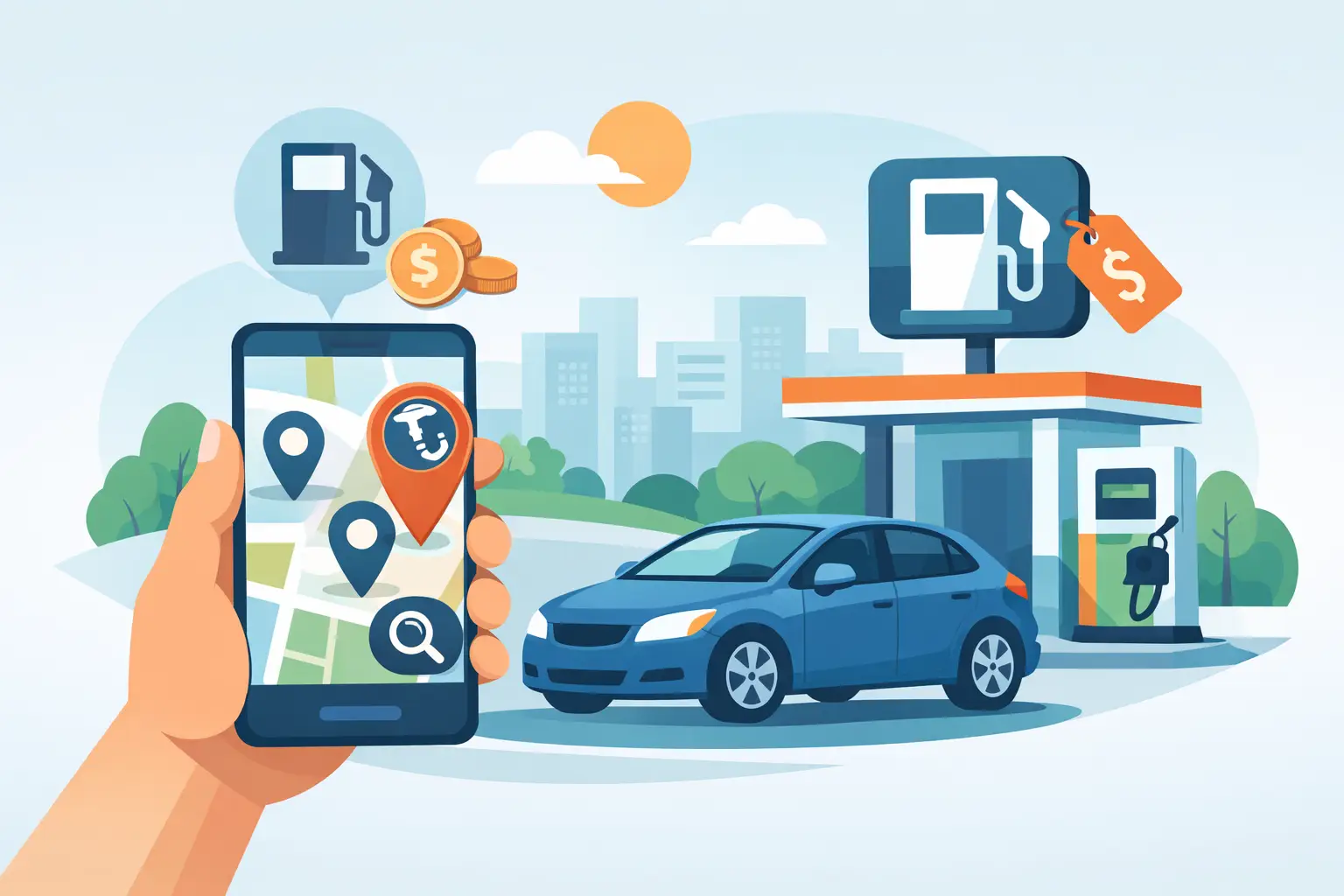
PricePAL Compare is designed for this kind of everyday check: use local price information before you set off, then make fuel part of the same money-saving routine as your grocery shop. The goal is not to chase a saving at any cost. It is to avoid paying more when a cheaper practical option is already nearby.
Compare the right fuel type
Petrol prices are only useful if you are comparing like with like. Most petrol cars in the UK use standard unleaded, commonly E10, while some vehicles require or perform better with E5 petrol. Premium unleaded is usually priced higher and should not be treated as a direct alternative unless your manufacturer recommends it or you have a specific reason to buy it.
The same rule applies to diesel. Compare standard diesel with standard diesel, and premium diesel with premium diesel. If you drive a hybrid, remember that a smaller tank does not remove the value of comparing prices - regular top-ups can still add up over a year.
Work out whether the cheaper station is worth the detour
A station charging 4p less per litre saves £2 on a 50-litre fill. That is worthwhile if it is on your route, but less attractive if it requires an unnecessary round trip and extra time. The right decision depends on the size of your planned fill, the distance involved and how much fuel your car uses.
Think in simple terms. If the cheaper forecourt is one or two minutes away on a journey you are making anyway, the saving is likely worth taking. If it is several miles out of the way, calculate whether the extra fuel used cancels out the lower pump price. Congested roads, parking at a supermarket and queuing at a busy station can also reduce the benefit.
This is why the cheapest listed price is not always your cheapest real-world option. For many drivers, the best choice is the lowest-priced station along a normal route, not the absolute cheapest station in the wider area.
Use your regular journeys to your advantage
Fuel savings are easiest to repeat when they fit around journeys you already make. If you pass a competitively priced forecourt on the commute twice a week, make that your default fill-up point. If a supermarket station is reliably cheaper while you do the weekly food shop, filling up there can save both money and a separate journey.
Avoid waiting until the tank is almost empty. Low fuel gives you fewer options and can force you to buy at a motorway service station or a convenient but expensive local forecourt. Keeping enough range to choose where you stop gives you more control over the price you pay.
Why local petrol prices can be so different
It is reasonable to wonder why petrol can cost noticeably more a few miles down the road. Forecourts do not all buy, price and compete in the same way. Their location, local competition, operating costs and customer demand all affect the price on the sign.
Motorway service areas often charge more because drivers have limited alternatives and value convenience when travelling long distances. Rural stations may also have fewer nearby competitors. By contrast, a supermarket forecourt or a station on a busy retail route may price more aggressively to attract regular customers.
Brand name alone does not tell you which station will be cheapest. A supermarket forecourt can be good value, but not every time. An independent station may undercut the larger brands in one area, while a branded station may be the better buy elsewhere. Compare the live local price rather than relying on assumptions.
Build a fuel-saving routine that lasts
Finding a lower price once is useful. Building a habit around comparing fuel prices can reduce a recurring cost week after week. Check prices before larger fills, especially before a long journey or after a period when fuel prices have been rising. For a small top-up, convenience may matter more. For a near-empty tank, the saving on a full fill is usually more meaningful.
It also helps to keep your fuel use under control between visits to the forecourt. Correct tyre pressures, steady acceleration and avoiding unnecessary idling can improve efficiency. These steps do not replace choosing a cheaper pump price, but they make every litre go further.
Do not overcomplicate it by chasing every 1p difference. A one-penny saving on 40 litres is 40p. It is still a saving when the station is convenient, but it may not justify a special trip. Focus on the larger gaps, the routes you already take and the stations that repeatedly offer good value.
Check before longer trips and busy weekends
Long-distance travel can make fuel spending less predictable. You may need to fill up away from your usual area, and the most obvious stops are often the costliest. Before leaving, check stations near your departure point, around planned breaks and close to your destination. Filling up before joining the motorway can often be cheaper than waiting for a service area.
Bank holiday traffic and school holiday travel can make convenience tempting, especially when children are in the car or you are trying to keep to a schedule. Planning one sensible fuel stop in advance reduces the chance of an expensive last-minute decision.
If you are towing, carrying a full car or driving into unfamiliar rural areas, leave a wider fuel margin. Saving money matters, but running low to reach a marginally cheaper pump is not a good trade-off.
Small price checks, repeatable household savings
Fuel is a necessary cost for many households, which is exactly why a quick comparison matters. You cannot always reduce the journeys you need to make, but you can reduce the amount you hand over for the same litres.
Check prices when you plan your next supermarket visit, commute or longer drive. Choose the cheaper practical forecourt, fill up before urgency takes over, and keep the saving in your household budget where it belongs.