

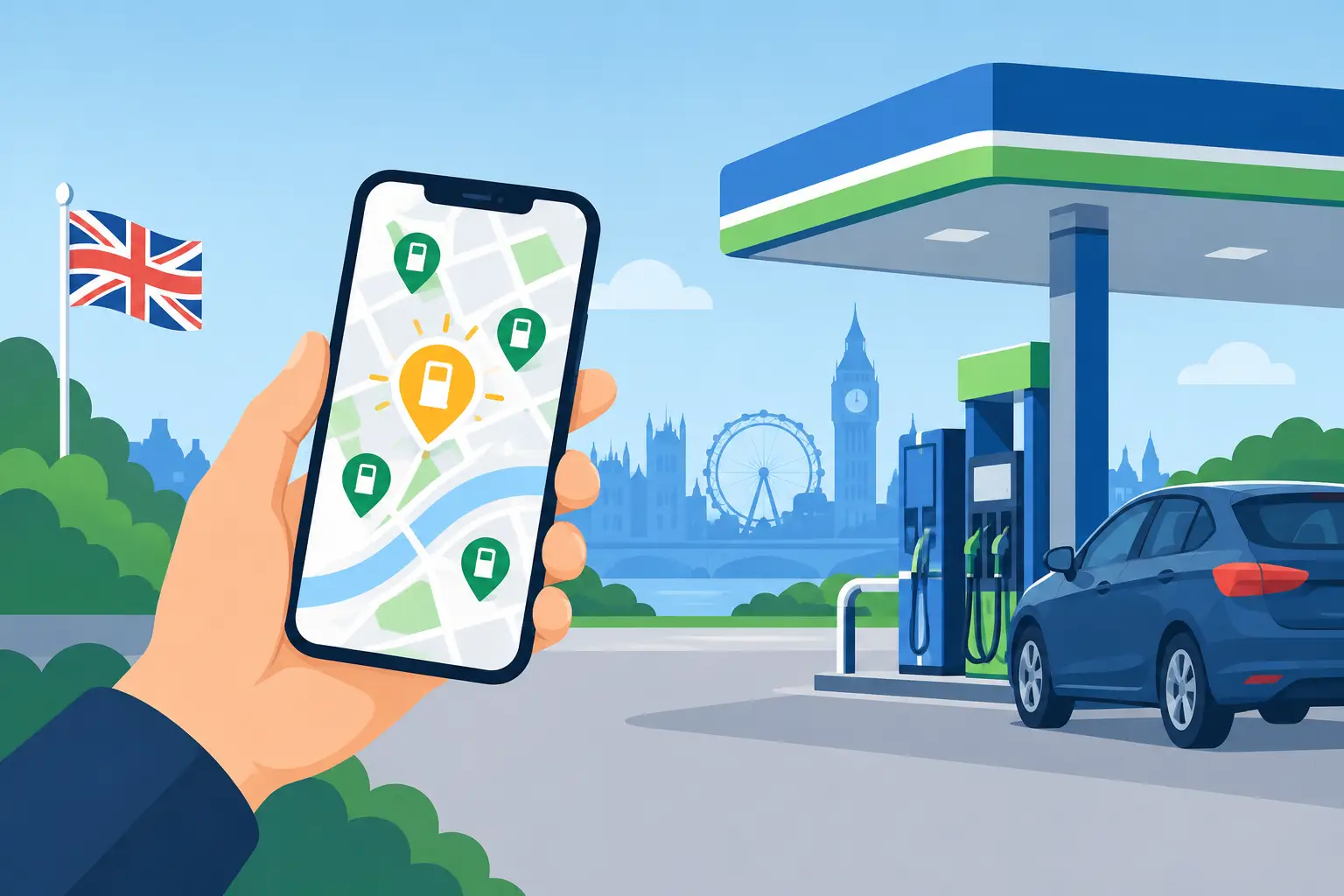
The price on the forecourt sign can turn an ordinary commute into an unnecessarily expensive one. A fuel price finder guide helps you check local petrol and diesel prices before you set off, so you can choose a cheaper station without wasting fuel, time or money getting there.
For most households, fuel is not a one-off purchase. It is a recurring bill that sits alongside the weekly food shop, school runs, work journeys and weekend plans. Saving a few pence per litre may not sound dramatic at the pump, but repeated across a full tank and a year of driving, it gives you more control over a cost that changes constantly.
How a fuel price finder saves money
A fuel price finder shows the prices reported by filling stations in your area, usually allowing you to compare petrol, diesel and sometimes premium fuels. The useful part is not simply finding the lowest number on a map. It is finding the lowest practical price for a journey you already need to make.
If one station is 6p per litre cheaper than another, filling a 50-litre tank saves £3. That can be a worthwhile saving if the cheaper station is on your route to work, near the supermarket or close to home. If it requires a 12-mile round trip in the opposite direction, the saving can quickly disappear in fuel used, time spent and extra wear on the car.
This is why the best approach is to compare prices before a planned journey, rather than chasing a low price after your fuel warning light appears. Checking regularly also helps you learn which areas tend to be more expensive. Motorway services, city-centre forecourts and isolated rural stations can be convenient, but convenience often carries a higher price.
Fuel price finder guide: check the right details
Start by entering your postcode, town or current location. Look at stations within a sensible radius, then compare the fuel grade your vehicle actually needs. A cheap diesel price does not help if you drive a petrol car, and standard unleaded should not be substituted for premium petrol where your manufacturer recommends otherwise.
Before you decide, check when the price was last updated. Fuel prices can move quickly, and a price reported several days ago may no longer match the pump. Treat a finder as a planning tool, then confirm the displayed price when you arrive if your route allows. A small difference is normal; a large one is a reason to choose another nearby option if available.
It also pays to look beyond the headline price. Consider whether the station is open when you need it, whether it is accessible from your direction of travel, and whether queues are likely at busy times. The cheapest forecourt is not always the best choice if getting in and out means a long diversion or difficult turn across traffic.
Work out whether a detour is worth it
The lowest price is only a real saving when the journey to reach it costs less than the difference at the pump. You do not need a complicated spreadsheet to make a sensible call.
First, estimate how many litres you plan to buy. Multiply that by the price difference between two stations. For example, a 5p-per-litre difference on 40 litres is worth £2. Then think about the extra miles needed to reach the cheaper option. If it adds only a mile or two to a trip you were already making, the saving is likely worth taking. If it adds a special journey, it may not be.
There is also a practical threshold. For a £1 saving, many drivers will reasonably choose the nearest station. For a £4 or £5 saving on a full tank, it is more likely to justify choosing a different forecourt along the same route. It depends on your mileage, your available time and whether you are already close to empty.
A useful habit is to build cheaper stations into routines you already have. Fill up near your regular supermarket, on the way home from work or before a longer trip. That is where a price finder delivers repeat savings, without creating more errands.
Compare like for like at the pump
Fuel stations may display several grades, and the cheapest figure on a sign is not always the fuel you need. Standard petrol is commonly labelled E10 in the UK. Most petrol cars made from 2011 can use it, but some older vehicles, classic cars and certain motorcycles may need E5. Check your handbook or manufacturer guidance if you are unsure.
Diesel drivers should compare standard diesel with standard diesel, not with premium diesel. Premium fuels may include additives and are often priced higher. They can suit some drivers and vehicles, but they are not automatically the best-value option for every fill-up. The right decision depends on your vehicle requirements, driving pattern and budget.
If you use a supermarket forecourt, compare its price with nearby independent and branded stations rather than assuming it will always be cheapest. Supermarket fuel can be competitively priced, particularly where several retailers compete locally, but local pricing varies. A five-minute check is more reliable than a habit.
Plan fuel checks around your weekly spending
Fuel savings work best when they become part of the same routine as checking grocery prices. Both costs change by location, promotion and timing, and both add up week after week.
Before your weekly shop, check whether a lower-priced station is near the supermarket you plan to use. If you commute, compare stations around your home, workplace and usual route. You do not need to check every forecourt in the county. Choose a handful of convenient options and make a quick comparison when you are likely to need fuel.
PricePAL Compare is designed for this practical kind of decision-making: compare grocery prices, find cheaper fuel nearby and keep more of your regular spending under control. The aim is not to spend hours hunting for deals. It is to make better choices before money leaves your account.
For families with multiple drivers, agree on a simple approach. Keep an eye on the same local stations, avoid filling up at costly convenience locations unless necessary, and top up during normal journeys when prices are favourable. Small changes are easier to maintain when everyone follows the same plan.
Avoid common fuel-saving mistakes
Waiting until the tank is nearly empty limits your choices. When the warning light comes on, you are more likely to use the closest station and accept whatever it charges. Filling up a little earlier gives you room to choose based on price and route.
Another mistake is comparing only the pence-per-litre figure without considering litres purchased. A 2p difference matters more on a 60-litre fill than on a £10 top-up. Likewise, it is easy to overvalue loyalty points or a shop voucher when the underlying fuel price is much higher. Check the final cost, not just the advertised reward.
Do not assume prices will fall tomorrow either. Fuel prices are affected by wholesale costs, exchange rates, supply conditions and local competition, none of which gives drivers a guaranteed day-to-day pattern. If you find a good local price and need fuel soon, taking the practical saving is often better than gambling on a small future drop.
Finally, avoid unnecessary fuel use in the name of saving money. A long detour, aggressive driving to beat traffic or idling in a queue can undermine the benefit. The goal is cheaper fuel as part of an efficient journey, not a bargain at any cost.
Make each comparison count
The strongest fuel-saving habit is simple: check prices before you need to buy, compare stations you can reach naturally, and calculate the saving on the litres you will actually purchase. Do that alongside your normal grocery planning and the savings become repeatable rather than occasional.
Next time you know a fill-up is due, check your nearby options before leaving home. A better price on a route you already drive is one of the easiest ways to make your weekly budget go further.