

The difference between two forecourts on the same route can look small on the sign, yet it adds up quickly over a month of commuting, school runs and weekend travelling. Petrol station price comparison gives UK drivers a simple way to see where their money goes before they pull onto the forecourt. Checking prices before you leave can turn a routine fill-up into a repeatable household saving.
Why petrol station price comparison pays off
Fuel is one of those costs that arrives whether the weekly budget is ready for it or not. Unlike a one-off purchase, it comes around again and again. That makes a few pence per litre worth paying attention to, particularly for households running more than one car or covering high weekly mileage.
A 5p difference per litre on a 50-litre fill is £2.50. Fill up once a week and that is about £130 over a year. The saving will be larger for drivers with bigger tanks, longer commutes or several vehicles in the household. It is not about chasing a deal once. It is about making a lower-cost choice each time you buy an essential.
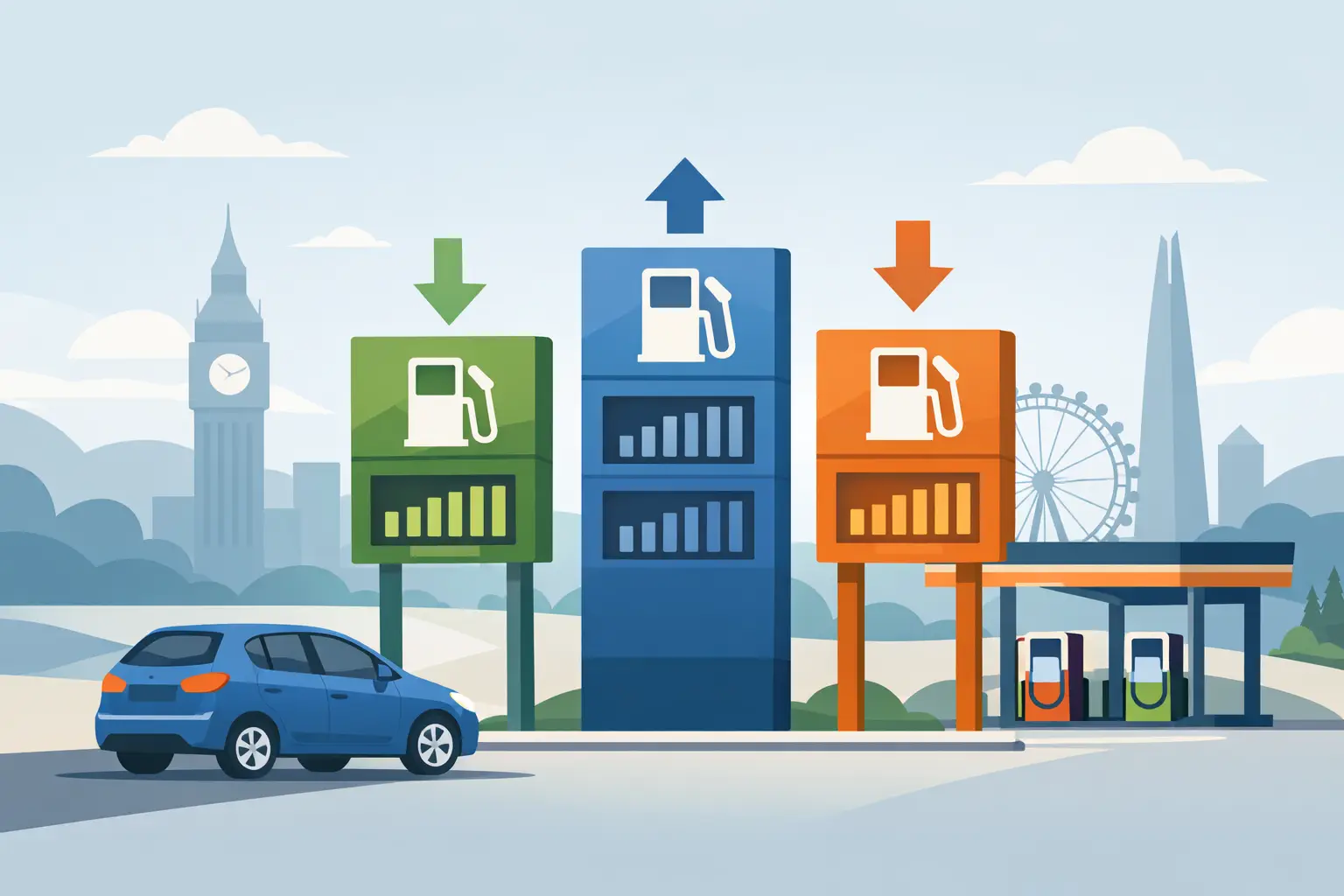
Prices can vary sharply between nearby stations. A supermarket forecourt may be cheaper than a branded station a few minutes away, while a station just off a major road may cost less than one directly beside it. Motorway services are often convenient when the tank is low, but that convenience can carry a higher price. Comparing first puts you in control of the trade-off.
Compare the right fuel, not just the biggest number
The price on a large roadside sign is only useful if it matches what your car needs. Check whether you are comparing unleaded petrol, diesel or premium fuel, and confirm the price is shown in pence per litre. It sounds obvious, but a quick glance can lead to comparing the cheapest petrol price with the diesel price you actually need.
For most petrol cars made since 2011, E10 is the standard unleaded fuel available at UK forecourts. Some older vehicles, classic cars and certain specialist engines may not be compatible with it. If your vehicle requires E5, its price can be higher and availability may be more limited. Follow your manufacturer’s guidance rather than switching fuel purely because a number looks lower.
Premium fuels are another case where the cheapest option is not always the right option. If your handbook specifies a particular octane rating or fuel type, use it. But if premium fuel is optional rather than required, check whether the claimed benefit justifies the extra cost for your driving and vehicle. A comparison is useful when it helps you buy suitable fuel at a better price, not when it encourages a false saving.
Look at the total journey cost
Driving several miles out of your way for a cheaper litre price can wipe out the saving. The practical question is not simply, “Which station is cheapest?” It is, “Which suitable station is cheapest on a journey I am already making?”
If a station is on your commute, near your supermarket or close to the school run, a modest saving per litre is usually worth taking. If it means a separate round trip, factor in the fuel used, your time and extra wear on the car. The best value is commonly the lowest local price with no unnecessary detour.
A practical petrol station price comparison routine
The most effective approach takes less than a minute and works best before the fuel light comes on. Waiting until the tank is nearly empty leaves you with fewer options and makes the nearest station feel like the only station.
Start by checking prices around your home, workplace and regular routes. Make a mental note of two or three stations that are convenient for you. Then compare their current prices before a planned fill-up. PricePAL Compare is designed to make that decision quicker by helping drivers find lower-priced fuel options alongside the grocery prices they already check.
Plan to fill up when you are passing one of your better-value options rather than treating fuel as an emergency purchase. There is no need to top up tiny amounts every day in pursuit of a changing price. A sensible approach is to keep enough fuel for flexibility, then buy a normal fill when a competitively priced station is already on your route.
It also helps to set a personal trigger. For example, if your tank is around one-quarter full, check local prices and decide where you are likely to fill up in the next day or two. This avoids the expensive last-minute stop while keeping the task manageable.
When supermarket fuel is cheaper - and when it is not
Supermarket forecourts often compete strongly on price, especially in larger towns and cities. If you are already doing the weekly shop, combining the two jobs can save both fuel and time. Some supermarkets also run targeted promotions or loyalty offers, although the real value depends on the final pump price and the conditions attached.
That said, supermarket fuel is not automatically cheapest. Independent stations and smaller local chains can be competitive, particularly where several forecourts are close together. Branded stations may also run lower prices at selected locations. The only reliable answer is to compare the stations accessible to you at the time you need fuel.
Avoid letting loyalty points dictate the whole decision. Points have value, but paying several pence more per litre to earn a modest reward may leave you worse off. Work out the actual saving at the pump first, then treat points as an extra benefit if the price is already competitive.
Common mistakes that make fuel cost more
Many drivers lose money not because they choose a clearly expensive station every time, but because small habits remove their ability to choose. Filling up only when the warning light appears is the main one. It creates urgency, and urgent purchases are rarely well compared.
Another mistake is assuming the price in one area represents the price everywhere. Fuel costs respond to local competition, delivery arrangements, forecourt location and operating costs. A station near a busy motorway junction can price differently from one a short distance into town.
It is also easy to focus on headlines about wholesale oil prices and expect the pump price to change immediately. Retail prices do not always move in a straight line or at the same pace. Taxes, distribution, stock bought at earlier prices and local competition all affect what you pay. Use market news as context, but use current local prices to decide where to fill up.
Finally, do not forget the rest of the car-cost picture. Steady driving, correctly inflated tyres and avoiding unnecessary trips can reduce fuel use. These habits do not replace price comparison. They make each cheaper litre go further.
Make fuel savings part of the weekly shop
Fuel and groceries are two of the most regular pressure points in a household budget. They are also purchases where small decisions repeat often enough to matter. Checking both before you leave home creates a more useful saving habit than hunting for occasional vouchers after the money has already been spent.
If you are planning a supermarket visit, check the price of your usual basket and identify the lowest-cost place to buy it. Then look at nearby fuel prices and decide whether filling up there makes sense. Sometimes one location will be best for both. Sometimes it is worth buying groceries in one place and fuel at a cheaper nearby station. The right choice depends on your route, tank level and the size of the difference.
Keep the process simple. Compare, choose a convenient lower-cost option, and repeat next week. You do not need to predict every market movement or drive across town for a penny. You only need enough price visibility to stop paying more by default.
The next time you are heading out with a low tank, check the local pump prices before starting the engine. That small pause can keep more of your weekly budget available for the things your household actually needs.