

A £3.50 jar of coffee can look like a small decision. Put the same product in your trolley every week, alongside a few other unexamined prices, and it becomes part of a larger supermarket bill that is harder to control. When you scan grocery barcodes in store, you can check what you are buying before you reach the till - and make a cheaper choice while it still matters.
Barcode scanning is not about turning every food shop into a long research task. Used well, it is a quick way to compare grocery prices, check whether an offer is genuinely useful and spot lower-cost alternatives for the products you buy often. For UK households watching weekly spending, those small checks can add up.
Why scan grocery barcodes in store?
Shelf labels do not always tell the full value story. A product may be on promotion, but its usual price could still be higher than an equivalent item elsewhere. A larger pack may cost more upfront without offering a better price per 100g, per litre or per wash. And a familiar brand can be substantially more expensive than a similar product sitting one shelf away.
Scanning the barcode gives you a fast starting point for a comparison. It identifies the exact product - including its size, flavour and pack format - so you are less likely to compare a 500g pack with a 750g pack or mistake a similar-looking item for the same one.
This is especially useful for repeat purchases such as tea, coffee, cereal, pasta, nappies, cleaning products, pet food and toiletries. These are the items that quietly reappear on the receipt week after week. Saving 30p or £1 on one regular item may not feel dramatic, but repeat that across a basket and across the month and the difference is real.
How to scan a grocery barcode while shopping
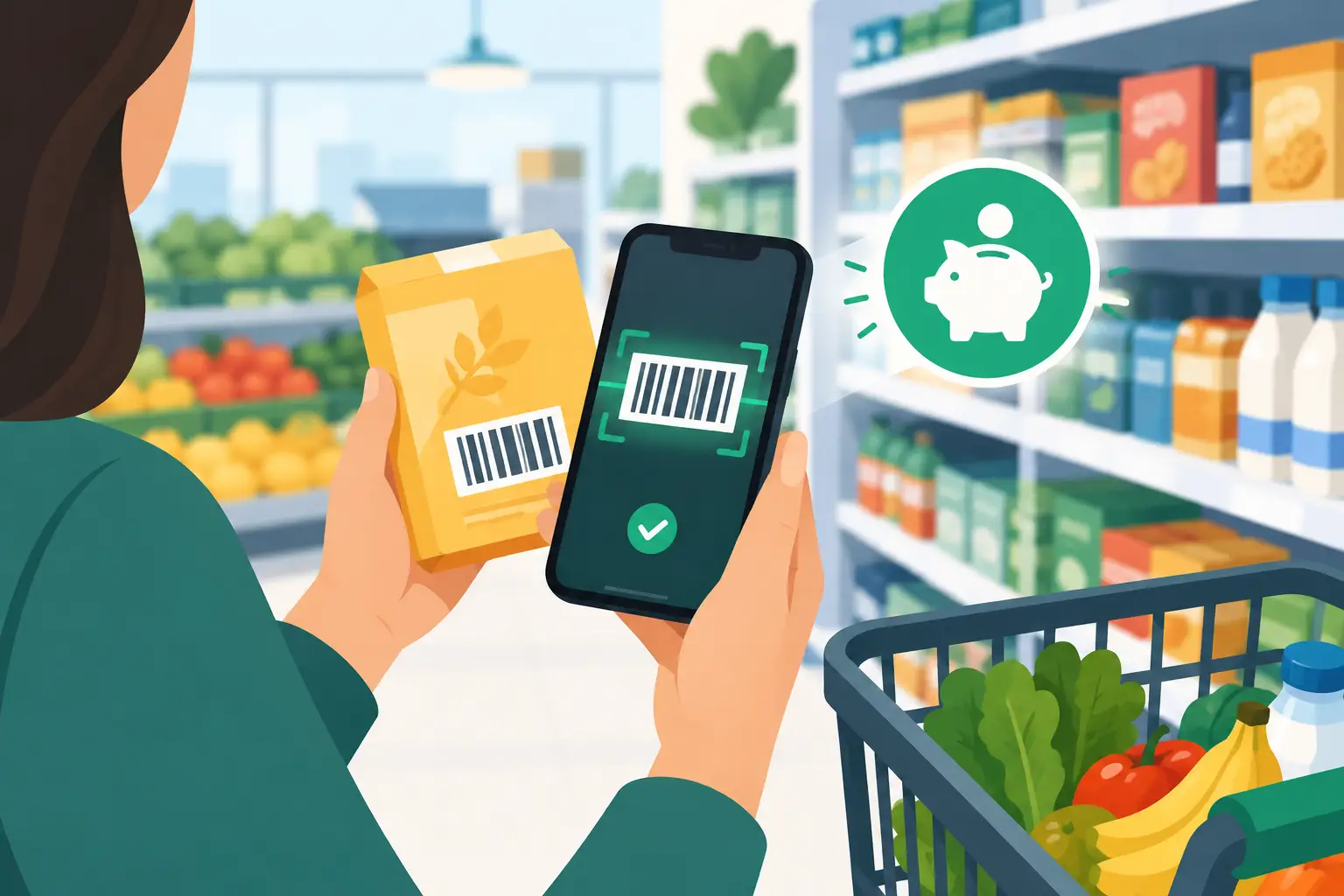
Open your price comparison app before you start shopping, rather than waiting until the trolley is full. Find the barcode scanner, allow camera access if prompted, then hold your mobile phone over the product barcode until it is recognised. Keep the barcode flat and in good light. If a shiny wrapper reflects glare, tilt the packet slightly or move closer.
Once the product is identified, check the product name and pack size first. This matters more than it sounds. Supermarkets often sell near-identical versions in different weights, multipacks or recipes. An exact match makes the price comparison more useful.
Then look at the prices available, the date the information was last updated and any offer conditions. A lower advertised price may require a loyalty scheme, a multibuy purchase or a minimum spend. If that condition would make you buy more than you need, it may not be a saving at all.
PricePAL Compare is designed to make this check practical: scan a product, compare grocery prices and use the result to decide whether to buy, swap or leave it for another shop.
Check the unit price, not just the pack price
The pack price tells you what leaves your bank account today. The unit price tells you what you are paying for the amount you receive. Both matter.
For food, compare the price per 100g, kilogram or litre. For household essentials, look for the price per wash, roll, sheet or tablet where available. A £4.00 family pack can be better value than a £2.50 smaller pack, but only if you will use it before it goes stale, expires or takes up space you do not have.
The cheapest unit price is not automatically the best choice. If buying the larger size pushes you over your weekly budget, creates waste or means you skip another essential, choose the pack that works for your household now. Good value is about money spent and product used.
What barcode comparisons can tell you
A barcode scan can help you answer several useful questions in seconds. Is the product cheaper at another supermarket? Is a branded option worth the extra cost? Is the offer price actually lower than the normal price elsewhere? Is there a comparable own-brand product that will do the same job?
It can also stop a common shopping habit: buying an item because a yellow label makes it feel urgent. Promotions are designed to catch attention, but the word “offer” does not guarantee the lowest price. Compare it with the price of an equivalent product and with what you usually pay before you decide.
For example, a two-for-£5 deal sounds better than two items at £3 each. But if you only need one, the relevant cost is £5, not £2.50. If another supermarket sells one for £2.20, the multibuy is not the better deal for your shop.
When a scan may not give the whole picture
Price information can vary by branch, region, delivery area and time of day. A promotion may have ended, be out of stock locally or apply only when you use a particular loyalty card. Fresh items sold by weight, reduced-to-clear products and bakery counters may not scan in the same useful way as packaged goods.
Treat a barcode result as strong price intelligence, then check the shelf label and the offer terms in front of you. If the till price differs from the displayed shelf price, raise it with staff before leaving the store. Keep your receipt until you have checked it.
A scan is also less useful when products are not directly comparable. One pasta sauce may be organic, another may have more servings, and a third may suit dietary needs that matter to your household. Price is a key factor, but it is not the only one. The aim is to make an informed choice, not simply buy the lowest number every time.
Build barcode scanning into your weekly shop
The quickest savers do not scan every item in the supermarket. They focus on the products with the biggest impact on their spending and the prices they are unsure about.
Start by scanning four groups: frequent buys, high-cost items, products on promotion and anything that has noticeably gone up in price. This keeps the process fast while targeting the parts of the basket most likely to deliver a saving.
Create a short mental list before you leave home. If your household always buys cereal, packed lunches, washing capsules and cat food, compare those first. Once you know which shop tends to offer the better price for your regular basket, you can plan future shops with less effort.
It also helps to separate a necessary switch from a false economy. Swapping a £3.00 branded cereal for a £1.25 own-brand version is useful if everyone will eat it. Buying a cheaper alternative that goes untouched is wasted money. Test one switch at a time, especially with family favourites, and keep the changes that genuinely work.
Use store comparisons without making extra journeys
A lower price elsewhere is only a saving if collecting it makes financial sense. Factor in fuel, parking, public transport and your time. Driving ten miles to save 40p on a product is not a bargain, particularly when fuel costs are part of the household budget too.
Instead, use the information to shape where you do your main shop, or save a product for the next time you are already near the cheaper supermarket. If you regularly pass a different store on the school run or commute, a small list of lower-priced staples can be worthwhile. If not, choose the best-value alternative available where you are.
This is where a consistent approach beats chasing every deal. Compare prices, scan barcodes when a purchase is uncertain and build a reliable basket of products that give your household good value. You do not need perfect prices on every item to reduce the total cost of the shop.
Small checks create repeat savings
Supermarket spending often rises through convenience: the familiar brand, the eye-catching offer, the assumption that a bigger pack must be cheaper. Barcode scanning puts a pause between seeing a product and paying for it. That pause gives you a choice.
Use it when the price looks high, when an offer seems too good to ignore or when you are choosing between similar products. Over time, you will recognise the prices worth paying, the items worth swapping and the deals that are only designed to look like savings. That is how a mobile phone in your hand can help you keep more control of every weekly shop.