


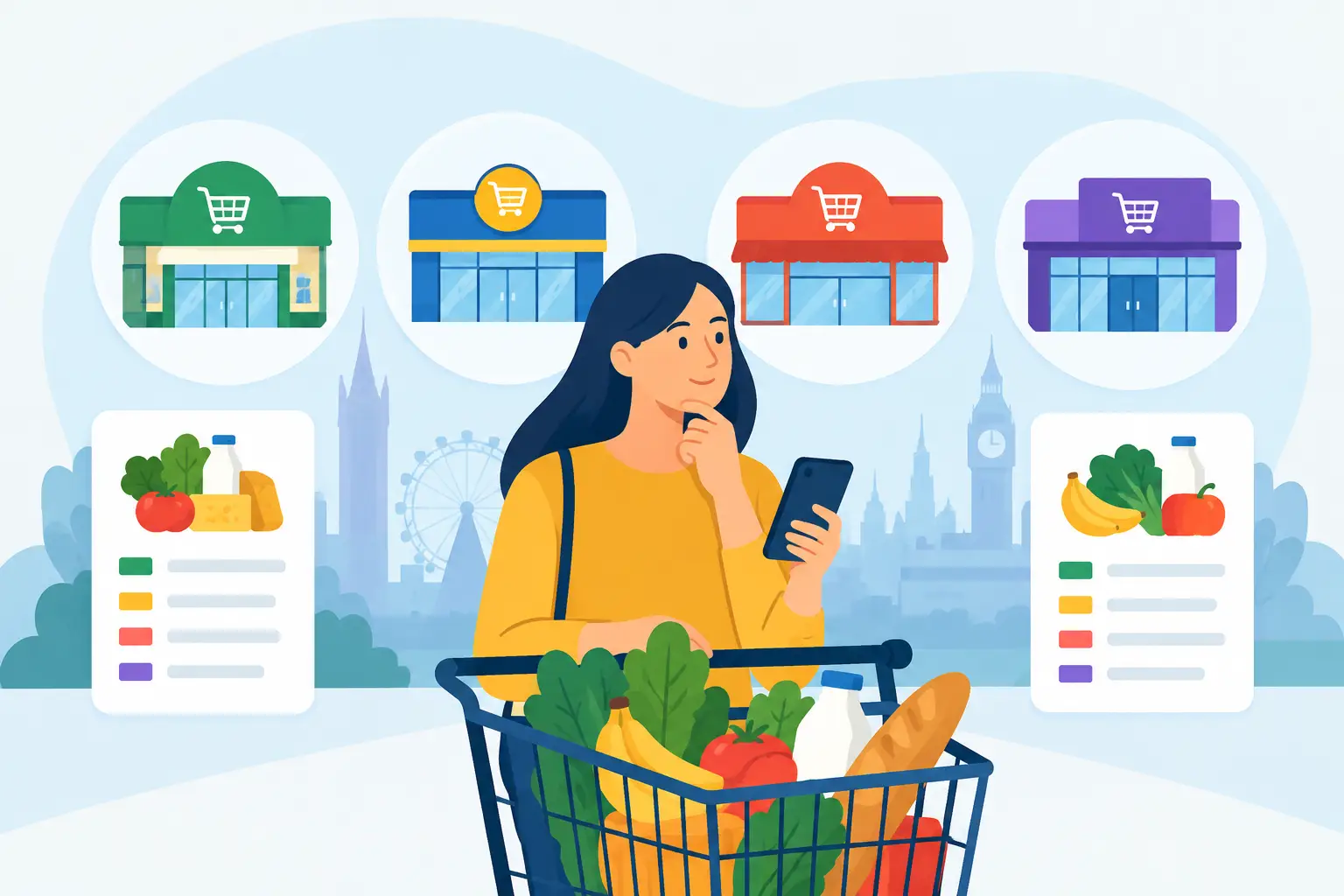
A £1 difference on one item is easy to dismiss. Repeat that difference across a weekly basket, school lunches, cleaning products and cupboard staples, and it becomes money your household does not need to spend. This UK grocery comparison guide shows how to compare with purpose, find cheaper alternatives and keep more control over every shop.
The goal is not to chase every offer or visit five supermarkets for a few pence. It is to make better decisions on the products you buy regularly, using current prices rather than assumptions. A practical comparison routine can reduce the cost of your food shop week after week.
Start with the items that move your total
Most households have a core list of products that appear again and again: milk, bread, fruit, vegetables, packed lunch staples, meat or meat alternatives, toiletries, pet food and cleaning supplies. These are the products worth comparing first because small price gaps recur.
Build a regular basket of around 15 to 25 items that reflects how you actually shop. Include branded products only where your household genuinely prefers them. If you normally buy own-label pasta, compare own-label pasta rather than an expensive branded equivalent. The comparison needs to match the purchase you are likely to make.
Check the total cost of this basket at the supermarkets available to you. One retailer may be cheaper on tinned goods and cereal, while another is better value for fresh produce. The cheapest shop depends on what is in your trolley, not on a supermarket's general reputation for value.
UK grocery comparison guide: compare like for like
The biggest comparison mistake is treating similar products as identical. Pack size, quality tier, ingredients and promotion rules can all change the real value. A larger pack is not automatically cheaper, and a low shelf price may apply only to a smaller quantity.
Use unit prices to make a fair comparison. These are usually displayed as price per 100g, per kg, per litre or per item on shelf labels and online listings. If one 500g packet of cheese costs £3.25 and a 750g packet costs £4.50, the larger pack may offer a lower price per 100g. But only buy it if you will use it before it goes off. Waste removes any saving.
For fresh food, compare the product you will actually receive. A pre-packed bag of apples may look cheaper than loose apples until you compare the weight, condition and number you need. For meat, look beyond the packet price and check the weight, cut and servings. For ready meals and convenience food, price matters, but so do portion size and whether you will still need extra sides.
Own-brand ranges also need a fair test. Basic, standard and premium own-label products can vary considerably. Switching from a premium branded item to a standard own-label version may save money without changing your routine. Switching to the lowest-priced version may work for some products and not for others. Test the changes that matter most to your budget first.
Treat promotions as a calculation, not a reason to buy
Multibuys, loyalty prices and temporary reductions can lower a bill, but only when they match your needs. A two-for-one offer is not a saving if you only wanted one and the second item is wasted. A loyalty price can be useful if you already use that retailer, but check whether a comparable product is still cheaper elsewhere.
When looking at a promotion, ask three quick questions: would you have bought it anyway, can you use it all, and is the unit price genuinely lower? This keeps your shopping list in charge rather than the promotional signage.
Stocking up makes sense on non-perishables and household essentials with a long shelf life, such as toilet roll, washing powder, tins, rice and coffee. It is less useful for products that tie up your food budget, fill limited cupboard space or expire before use. A cheap bulk purchase can still be poor value if it changes what you need to buy later in the week.
Use barcode scanning while you shop
Planning before you leave home is useful. Checking a product in the aisle can be even more valuable, especially when an offer, a changed pack size or an unfamiliar brand makes the choice less clear. Barcode scanning gives you a quick way to check the product and compare its price without relying on memory.
Scan products you buy often, higher-priced branded items and anything that looks unusually cheap or expensive. This is particularly helpful for toiletries, baby products, coffee, pet food, cleaning products and health-and-beauty essentials, where price differences can be substantial.
PricePAL Compare is built for this practical moment: compare grocery prices before shopping, then scan barcodes when you need a fast price check in store. It helps turn a vague feeling that something costs too much into an informed choice.
Do not assume a scan result means a product is available at every nearby branch. Local stock, regional ranges and short-term offers can vary. Use the information to decide whether to buy now, choose an alternative or add the item to your next planned shop.
Choose the right shopping pattern for your week
A single weekly supermarket shop is convenient, but it may not always be the cheapest option. Equally, travelling between multiple shops can cost more in time, fuel and impulse purchases than it saves. The best approach depends on where you live, how you travel and the size of the potential saving.
For many households, a sensible pattern is one main shop for the bulk of the basket and a smaller top-up for fresh items. Compare the main basket first, then use the top-up shop only for products you need before the next planned trip. This reduces food waste and limits the costly habit of picking up extras every other day.
If you shop online, include delivery charges, minimum spend requirements and any substitutions in the real cost. A cheap basket can become less competitive once delivery is added. Collection may be better value if it fits naturally into a journey you are already making, but not if it creates a separate round trip.
Factor fuel into the true cost of saving
A cheaper supermarket is not always cheaper once the journey is included. If driving an extra distance uses fuel, takes time and encourages an additional shop, the headline grocery saving can disappear. Compare the full cost of the trip, particularly for smaller baskets.
This does not mean you should only use the nearest retailer. It means the saving should justify the journey. Combining a grocery shop with a commute, school run or other planned errand can make a cheaper store worthwhile. Checking nearby fuel prices at the same time helps keep both regular household costs under control.
For larger shops, a difference of £10 or £15 may be worth planning around. For a few items, the closest convenient option is often the better financial decision. Price comparison is about net savings, not just the lowest figure on a product label.
Make a repeatable comparison routine
The most reliable savings come from a routine you can maintain. Set aside a few minutes before your main shop to review your list, compare your regular basket and check whether staple prices have changed. Keep a note of products where a different supermarket or own-brand option consistently wins.
When you are in store, stick to the list but stay alert to genuine substitutions. If your usual item has risen in price, compare the unit cost of nearby alternatives. If an item is on offer, check whether it beats your normal choice rather than adding it automatically.
After a few weeks, you will know which products are worth monitoring and which are already good value. That is where comparison becomes easier: you are not researching everything from scratch, only checking the prices that affect your budget most.
A lower grocery bill rarely comes from one dramatic change. It comes from noticing the repeat purchases, checking the numbers and making the cheaper choice often enough for it to count. Before your next shop, compare your regular basket first - that is where weekly savings start to build.